

A Call for Help That Vanished
The Disappearance and Death of Timothy Sneed “Timmy” Dees — and the Investigative Failures That Followed


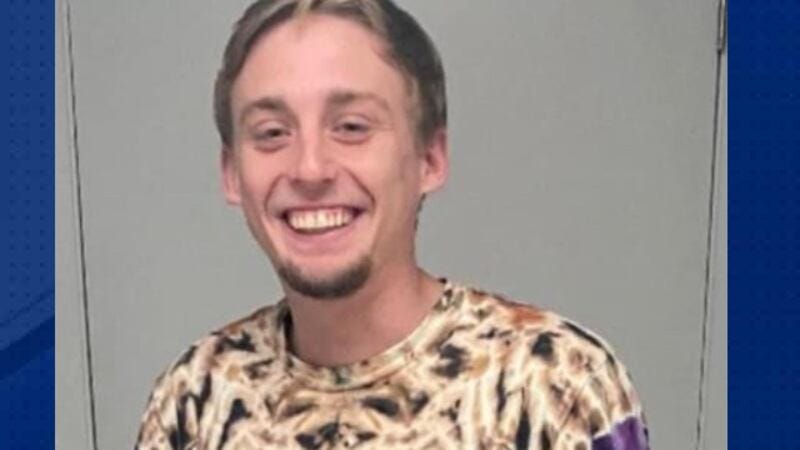
I. Case Summary — The Night Timmy Dees Called 911
Timothy Sneed “Timmy” Dees was 26 years old. A union rigging worker from Creve Coeur, Missouri. A young man with a job, a routine, and a family that knew his patterns well enough to recognize the difference between silence and danger.
On February 28, 2022, Timmy disappeared in Fredericktown, Madison County, Missouri, after placing a 911 call at approximately 4:40 a.m. He reported that a friend was threatening him and chasing him. That call should have created a record—his voice, his distress, the background noise, the urgency—anything that could later anchor the timeline to reality. It did not.
There is no recording of Timmy’s 911 call. Not because it was lost. Not because it was mishandled later. Madison County’s 911 recording equipment had malfunctioned in December 2021 and was not replaced until mid-March 2022. As a result, there is no audio documentation of what Timmy actually said, no record of his emotional state, and no corroborating evidence of the threat he reported.
Standard emergency protocol mandates that dispatchers maintain an open line with callers until law enforcement arrives. That protocol exists to preserve evidence in real time: location, condition, movement, escalation. In Timmy’s case, this did not happen. No operator remained on the line with him to pinpoint his location, confirm details, or provide reassurance and direction. This was not a minor procedural oversight. It eliminated the only contemporaneous record of Timmy’s distress.
An officer arrived at approximately 4:48 a.m., roughly eight minutes after the 911 call. Timmy was not present. The officer encountered the individuals Timmy had been with earlier at a residence on County Road 277. Instead of initiating a search for a 26-year-old who had just reported being chased and threatened, the officer arrested one of those individuals on an unrelated outstanding warrant.
No search was conducted for Timmy. No perimeter was established. No attempt was made to locate him despite the proximity to the call location and the active nature of the reported threat. The officer later explained his decision by stating he believed “the conflict was over” because he was told Timmy had “left a short time earlier.” That statement was accepted without corroboration. No property search followed. No follow-up investigation was initiated.
Barbara Hall, Timmy’s mother, did not hear from her son for several days after February 28. This was highly abnormal. Since the death of Timmy’s brother Michael on June 19, 2021, Timmy had been calling or texting his mother nearly every day. When she could not reach him, she described becoming “deathly sick,” recognizing that something was fundamentally wrong. She filed a missing person report on March 2, 2022—four days after the 911 call.
On July 21, 2022, Timmy’s skeletonized remains were discovered approximately 184 yards from where he placed the 911 call. The property where his remains were found is owned by an Associate Circuit Judge with jurisdiction over Madison County cases. No cause of death has been determined. No manner of death has been established. No arrests have been made. The case remains closed.
II. Who Was Timmy Dees
Timothy Sneed “Timmy” Dees was not a transient figure, not a person living on the margins, and not someone whose disappearance could be explained away by instability or isolation. The available record is clear on this point, and it matters.
Timmy was 26 years old at the time of his disappearance. He lived in Creve Coeur, Missouri. He was employed as a union rigging worker, affiliated with Local 6. He had steady work, regular pay, and an established routine. There is nothing in the record to suggest he was disengaged from his life or disconnected from the people around him.
Eight months before Timmy disappeared, his brother Michael died on June 19, 2021. This loss had a profound impact on him. According to his mother, Barbara Hall, Timmy’s behavior changed in a specific and measurable way after his brother’s death: he began calling or texting her nearly every day. This was not casual or sporadic communication. It was consistent, habitual, and emotionally anchored. It reflected grief, closeness, and reliance—not withdrawal.
Because of this pattern, Barbara knew something was wrong almost immediately when she could not reach him after February 28, 2022. Timmy’s silence was not normal. It was not ambiguous. It was not explainable by routine absence or voluntary distance. It was a break in a daily behavioral pattern that had been established for months.
Barbara described becoming “deathly sick” when she could not reach her son. That reaction was not intuition in the abstract. It was recognition based on routine. She knew his habits. She knew his communication style. She knew that something had happened.
Timmy’s mother described him as a jokester—someone with humor, lightness, and an ability to bring levity into situations. She described him as kind-hearted. She emphasized that he was someone who advocated for the underdog, someone who cared about people who were worse off than he was. These descriptions are not incidental character color. They directly contradict any narrative that Timmy was reckless, volatile, or prone to unnecessary confrontation.
Equally important is what Timmy was not known for doing.
According to Barbara, Timmy did not involve law enforcement in conflicts unless he believed the situation was serious. The family’s norm was to handle problems without police involvement unless they were life-threatening. This context is critical. Timmy calling 911 was not casual. It was not reflexive. It was not routine. It was an escalation that indicated fear and perceived danger significant enough to override his normal behavior.
The available reporting makes this point explicitly: the fact that Timmy made a 911 call at all indicates he believed he was in immediate danger. He was not someone who regularly called police. He was not someone who sought official intervention as a default response to conflict. The call itself is evidence of distress.
Timmy’s employment history further undermines any attempt to marginalize him after the fact. He was working. He had union affiliation. He had checks waiting at the union hall. He was engaged in his trade. There is no indication he was in crisis related to employment, housing, or stability at the time he disappeared.
When investigators later closed the case on the assumption that “the people to last see Timmy were being truthful,” they did so without reconciling that assumption with who Timmy was as a person. They did not account for his communication patterns. They did not account for his reluctance to involve police. They did not account for the fact that a man with his routine, habits, and family connections does not simply vanish hours after calling 911 unless something has gone seriously wrong.
Understanding who Timmy Dees was is not ancillary to the investigation. It is foundational. It provides context for why the 911 call mattered, why his disappearance was immediately alarming to those who knew him, and why the absence of follow-up and search was not just a procedural failure but a failure to recognize risk.
Timmy was a son who stayed in close contact with his mother. A brother who was still grieving a recent loss. A working tradesman with structure and responsibility. A person whose decision to call 911 represented a departure from his normal behavior, signaling fear rather than convenience.
Any investigation that fails to center who Timmy Dees was cannot accurately assess what happened to him.
III. The Family’s Search and the Delay That Followed
When Timmy Dees did not return home and did not make contact, the people who knew him best understood immediately that this was not normal. The reporting makes clear that this recognition did not come from hindsight or speculation. It came from established patterns.
After February 28, 2022, Barbara Hall attempted repeatedly to reach her son. Calls went unanswered. Messages were not returned. As days passed, the absence hardened into certainty: something had happened. This was not a young man taking space. This was not a missed phone. This was not a voluntary disappearance.
On March 2, 2022—four days after Timmy placed the 911 call—Barbara filed a missing person report. By that point, a critical window had already closed. Available reporting establishes that the period immediately following a disappearance, particularly one preceded by an emergency call reporting an active threat, is when evidence is most recoverable and outcomes most alterable.
Despite the filing of the missing person report, available reporting indicates that law enforcement response did not meaningfully accelerate. According to public statements cited in reporting, the family stated that it took weeks for law enforcement to become actively involved. Whether through staffing limitations, prioritization decisions, or institutional inertia, the effect was the same: no immediate, coordinated search effort followed the report.
The absence of urgency compounded the failure that had already occurred on the morning of February 28. By the time the case was formally treated as a missing person investigation, weather, time, and human activity had degraded any physical evidence that might have existed near the call location. Witnesses who could have been interviewed immediately were no longer operating within a fresh memory window. Surveillance footage that might have existed at nearby locations was no longer guaranteed to be preserved.
Faced with institutional inaction, Barbara acted.
She organized independent searches of the area surrounding County Road 277 and the location where Timmy placed the 911 call. These were not official operations. They were community-led efforts involving volunteers and search dog handlers. Available reporting indicates that these searches were born not out of preference, but necessity. They existed because the system that should have been searching was not.
During these independent searches, dogs alerted in multiple locations, including near storage units located directly across the road from where Timmy made the 911 call. These alerts would later become one of the most significant unresolved leads in the case. At the time, however, they underscored a larger reality: critical investigative momentum was being driven by a grieving mother and community members, not by the agencies responsible for missing person investigations.
Uncovered Investigates research does not suggest that law enforcement was entirely absent. It documents contact, reports, and eventual involvement. But it draws a clear distinction between presence and action. The problem was not that authorities were unaware of Timmy’s disappearance. The problem was that the response lacked urgency, scope, and follow-through at the moment when those elements mattered most.
This delay is not a footnote. It is a structural failure that shaped everything that came after. By the time Timmy’s remains were discovered months later, the opportunity to answer the most basic questions—where he went after the call, how he moved through the area, who may have encountered him—had largely evaporated.
The reporting treats this delay not as an unfortunate consequence, but as a causal factor. It is one of the reasons the case remains defined by absence: absence of recordings, absence of searches, absence of contemporaneous documentation, absence of answers.
When an investigation begins late, it does not simply start behind. It starts compromised.
IV. The Debit Card Anomaly
Among the unresolved facts in this case, the movement of Timmy Dees’ debit card stands out because it introduces a documented event after the 911 call—an event that should have expanded the investigation rather than narrowing it.
The documented record establishes a specific sequence of events.
In the early hours of February 28, 2022, Timmy was captured on surveillance video at a local gas station in Fredericktown, Missouri. At approximately 1:30 a.m., he withdrew cash from an ATM and purchased drinks for the people he was with [1][2].
At approximately 4:40 a.m., Timmy placed a 911 call reporting that a friend was threatening him and chasing him [2].
At 9:11 a.m.—approximately four and a half hours after the 911 call—Timmy’s debit card was attempted at an ATM [2].
The receipt documentation later obtained by Barbara Hall records a specific failure message: “Failed to read EMV card. (3 failures)” [2]. This detail is significant. It indicates the card was physically present and physically swiped multiple times, but the machine was unable to read the chip. This is not consistent with an incorrect PIN entry, which generates a different error message [2].
This event raises a series of unresolved questions:
Who had access to Timmy’s debit card nearly five hours after he reported being threatened and chased?
Where was the ATM where the attempted transaction occurred?
Were surveillance cameras present at that location, and if so, what do they show?
Why has no footage from that ATM been publicly released?
How did the debit card later end up back in Timmy’s pants pocket when his remains were discovered?
Investigators appeared to initially theorize that the card usage involved an incorrect PIN entry. However, the documented EMV error contradicts that explanation [2]. The technical evidence indicates repeated physical swiping attempts rather than user error.
There is no documentation indicating that investigators identified the ATM location, obtained surveillance footage, or reconstructed the movement of the card after the 911 call. No records show that follow-up interviews were conducted regarding the attempted transaction, or that this anomaly was pursued as an investigative lead [2].
In a case where a person reported an active threat and then disappeared, a documented financial transaction occurring hours later should have triggered immediate investigative escalation. Instead, it appears to have been acknowledged and then left unexplained.
The debit card anomaly remains one of the few concrete, time-stamped events that occurred after the system disengaged. It introduces the possibility of third-party involvement and post-call activity that has never been accounted for.
V. Discovery of the Remains and Forensic Irregularities
On July 21, 2022, skeletonized human remains were discovered in Madison County, Missouri [2]. Available reporting establishes that the remains were found approximately 184 yards from the location where Timmy Dees placed his 911 call on February 28, 2022 [2].
The discovery location is significant. The property where the remains were found is owned by Robin Edward Fulton, an Associate Circuit Judge serving in Missouri’s 24th Judicial Circuit Court, which has jurisdiction over Madison County cases [1][10][11].
This fact introduces an appearance-of-impropriety concern that was never publicly addressed. No documentation has been released indicating whether Judge Fulton recused himself from any involvement related to the investigation, nor whether any formal conflict-of-interest procedures were followed [2].
Barbara Hall was present following the discovery of the remains and observed multiple physical irregularities that raised immediate forensic concerns.
At the time of initial examination, Barbara observed that one of Timmy’s teeth was missing from the jawbone [2]. However, by the time the remains reached the funeral home for preparation, the tooth had been replaced, and the jaw appeared intact. The official autopsy report does not document that a tooth was missing at discovery, does not note any replacement, and does not explain when or how the substitution occurred [2].
Dental evidence is a critical component of skeletal identification and trauma analysis. Standard forensic protocol requires that dental findings be photographed, documented, and preserved throughout examination. The absence of any record explaining the missing and replaced tooth represents a documented chain-of-custody failure [2].
Barbara also observed a small, unusual hole located directly behind Timmy’s front teeth [2]. Investigative analysis describes the placement of this hole as suspicious, positioned in the area behind the tooth that had been missing for a period of time [2]. This observation raises a specific forensic question: whether the hole could be consistent with a small-caliber gunshot wound. No ballistic or trauma analysis addressing this possibility has been documented or publicly released [2].
Additionally, Barbara noted that Timmy’s lower jaw was a distinctly different color than the rest of the skeletal remains [2]. If all remains had decomposed in the same environment for the same duration, they would be expected to show similar coloration and weathering. The discrepancy raises a fundamental forensic question: whether the lower jaw belongs to Timmy Dees. No forensic testing or explanation resolving this inconsistency has been documented [2].
The official autopsy findings listed the cause of death as undetermined and the manner of death as undetermined [5][6]. The report states that no stab wounds were observed, no bullet wounds were observed, and no apparent trauma was attributed to any specific cause. These conclusions were reached without documented explanation for the missing tooth, the hole behind the front teeth, or the jaw coloration discrepancy [2][5][6].
The discovery of Timmy’s remains did not resolve the case. Instead, it introduced additional physical anomalies that were never publicly explained. These anomalies sit at the center of a case that was ultimately closed without identifying how or why Timmy Dees died.
VI. Witness Inconsistencies and Investigative Contamination
After Timmy Dees disappeared, law enforcement obtained statements from the individuals who were with him in the hours leading up to the 911 call. Available reporting indicates that these statements were not consistent with one another. Investigators reportedly received as many as ten different versions of events from the same group of people [3][7].
Rather than treating these contradictions as indicators requiring intensified scrutiny, the investigation appears to have stalled. Investigators themselves acknowledged the incoherence of the accounts, stating that they were unable to determine what happened because of the volume of conflicting stories [3]. Despite this, the inconsistencies did not result in documented confrontational re-interviews, evidentiary testing of statements against timelines, or escalation of investigative pressure [2].
The presence of multiple contradictory accounts from individuals last known to be with a missing person who placed a 911 call reporting an active threat would normally be considered a red flag. In such cases, contradictions are not neutral. They are signals. No public record shows that these contradictions were resolved or meaningfully interrogated before the case was closed [2].
More concerning is evidence that the integrity of the witness statements themselves may have been compromised. Investigative reporting indicates that detectives shared their theories with witnesses before all statements were obtained [6]. This practice is widely understood to contaminate testimony. When witnesses are exposed to investigator theories in advance, their recollections can be shaped—consciously or unconsciously—to align with what they believe investigators want to hear.
The Lawless Files reported that detectives were “sharing their theories with the last people to see Timmy alive” before those individuals provided statements, after which the witnesses offered differing stories [6]. This sequence undermines the reliability of the statements themselves. Once testimony is contaminated in this way, it becomes difficult—if not impossible—to separate original recollection from suggestion.
Public transparency regarding these interviews is limited. While one individual, Caleb Nanney, has been publicly identified as the friend Timmy was with that night, his formal interview status, the content of his statements, and the conclusions drawn from them have not been made public [2]. The role and statements of Michael Buesking are similarly undisclosed [2].
The public has not been provided access to interview transcripts, audio recordings, or detailed summaries that would allow independent evaluation of the investigation’s handling of witness testimony. Without those materials, it is impossible to assess whether contradictions were reconciled, whether statements evolved over time, or whether inconsistencies were treated as evidence rather than inconvenience [2].
Despite these unresolved issues, the investigation ultimately proceeded toward closure. The Missouri Highway Patrol later cited acceptance of the witnesses’ accounts as part of its rationale for closing the case, even though those accounts were internally inconsistent and potentially contaminated [5][6].
In an investigation where a victim reported being chased and threatened minutes before disappearing, the credibility of the last known witnesses is central. When those witnesses provide multiple conflicting narratives and are exposed to investigator theories before statements are finalized, the investigative process itself becomes compromised.
This was not a matter of optics. Witness inconsistencies were not resolved. Potential contamination was not corrected. And the case moved forward as though these defects did not materially affect the reliability of the conclusions drawn.
VII. The Storage Unit Lead and the Warrant That Was Never Pursued
During the independent search efforts organized by Barbara Hall, a lead emerged that should have altered the direction of the investigation. Search dogs alerted at two storage units—identified as units 5 and 6—located directly across the road from the area where Timmy Dees placed his 911 call [2][6].
The proximity of these units matters. They were situated only a short distance from the reported incident location, close enough that movement between the scene and the units could have occurred within minutes. In the context of a missing person case involving an emergency call reporting an active threat, this proximity established immediate relevance [2].
Volunteers were able to gain access to one of the two storage units and conduct a search. The second unit, however, was not searched. Law enforcement refused to search unit 6 despite the property owner granting permission for entry [2].
Barbara Hall was later informed that the second storage unit was rented by a high school resource officer—a sworn law enforcement officer assigned to a school system [2]. This detail elevated the significance of the refusal. A storage unit linked to a law enforcement officer, located across from the scene of a missing person case, and flagged by search dogs, presented a combination of factors that typically establish probable cause for further action.
This raises a direct procedural question: why was a search warrant not pursued for unit 6? Under standard investigative practice, a warrant would have allowed legal entry regardless of renter consent, provided sufficient cause existed. In this case, the documented factors—dog alerts, proximity to the 911 call location, the missing person status, and the refusal to permit a voluntary search—collectively met the threshold that often supports warrant issuance [2][6].
No documentation has been produced showing that investigators sought a warrant. There is no public record of a warrant application being denied. There is no explanation provided for why this legal avenue was not pursued [2].
Civilian searches lack legal standing, but law enforcement searches do not require permission when authorized by a warrant. The decision not to seek one effectively insulated the contents of the storage unit from scrutiny. Whether this decision stemmed from oversight, reluctance, or deference, the result was the same: a potentially significant lead was left unexplored [6].
The refusal to search unit 6 stands in contrast to the broader pattern of investigative inaction documented throughout the case. Opportunities to gather physical evidence were repeatedly bypassed. In this instance, a clear legal mechanism existed to overcome the obstacle. It was not used.
The contents of storage unit 6 remain unknown. No inventory has been released. No explanation has been offered. And no justification has been documented for why a warrant was never pursued in a case already marked by unresolved evidence and unanswered questions.
VIII. Judicial Conflict and Institutional Silence
The location where Timmy Dees’ remains were discovered introduces one of the most serious unresolved issues in the case: judicial conflict of interest and the absence of documented safeguards to address it.
Public records establish that the property where Timmy’s remains were found is owned by Robin Edward Fulton, an Associate Circuit Judge serving Missouri’s 24th Judicial Circuit, which includes Madison County [1][10][11]. Judge Fulton has held this position since 2011 and presides over cases arising within the same jurisdiction where Timmy disappeared and was later recovered.
This fact alone does not establish wrongdoing. There is no allegation of criminal conduct by Judge Fulton. What it does establish is a clear appearance-of-impropriety concern that required formal handling—and yet, no such handling has been documented.
When a judge’s personal property becomes the discovery site of human remains connected to an unresolved death, standard judicial ethics demand transparency. At minimum, the public record should reflect whether the judge recused himself from any involvement related to the case, whether investigative authority was reassigned, and whether safeguards were implemented to prevent even the perception of influence over proceedings. No public documentation shows that any of these steps occurred [2].
No recusal notice has been produced. No statement has been released explaining Judge Fulton’s role, if any, after the discovery. No documentation exists indicating whether he had prior knowledge that remains were on his property or when he became aware of their presence [2].
The absence of this information matters because judicial authority intersects directly with investigative and prosecutorial processes. Judges oversee warrants, preside over cases, and influence procedural outcomes. Even if Judge Fulton exercised no direct authority in this case, the lack of documentation confirming separation creates an accountability gap that undermines public confidence.
Conflict-of-interest procedures exist not only to prevent actual bias, but to preserve trust in the integrity of the system. When those procedures are not documented, the public is left to infer outcomes without transparency. In this case, that silence compounds existing concerns about investigative failures, unpursued leads, and premature case closure [2].
The issue is not merely symbolic. If a warrant had been sought in this case—whether for storage units, electronic records, or property searches—questions naturally arise about which judge would have reviewed it. Without documentation showing recusal or reassignment, the integrity of any judicial oversight related to the investigation remains unclear.
This silence appears institutional rather than individual. No agency has publicly explained how potential conflicts were addressed. No clarification has been issued to reassure the public that judicial ethics protocols were followed. Instead, the matter has been absorbed into the broader pattern of non-explanation that defines the case.
In an investigation already marked by missing records, absent searches, and unresolved evidence, the lack of transparency surrounding judicial conflict does not stand alone. It reinforces a consistent theme: critical questions are left unanswered, not because answers are unavailable, but because no one has publicly accounted for them.
IX. A Pattern Beyond One Case
UI’s research makes clear that the circumstances surrounding Timmy Dees’ disappearance and death do not exist in isolation. They align with a broader pattern of investigative failure, unresolved deaths, and institutional breakdown in Madison County, Missouri.
Investigative reporting documents a history of missing persons cases, suspicious deaths, and premature case closures in the region [3][12][14]. These are not framed as anecdotal concerns. They are presented as a documented pattern that becomes visible only when cases are examined collectively rather than in isolation.
Fredericktown, the town where Timmy disappeared, has been cited in reporting as having a crime rate significantly higher than national averages for communities of similar size [14]. This context matters when evaluating investigative outcomes. Elevated crime rates increase the necessity for rigor, documentation, and persistence in investigations—not the tolerance for incomplete work or early closure.
Reporting references a comprehensive investigation by journalist Synova Cantrell titled Madhouse Madison County, which examined at least fifteen additional cases involving unexplained deaths, disappearances, or questionable suicide determinations within the county [12]. That investigation originated after a grandmother sought assistance regarding her own family’s unresolved case and expanded as recurring failures across multiple cases became increasingly difficult to dismiss.
Across those cases, reporting identified recurring deficiencies, including:
delayed or absent searches
inconsistent or missing records
premature case closures
failure to pursue obvious leads
lack of transparency with families
repeated reliance on assumptions rather than evidence [12][3]
UI’s research also references long-standing unresolved cases, including the disappearance of a 13-year-old girl abducted from a roadside in 1989, a case that remains unsolved decades later [12]. These cases are not cited to suggest a direct connection to Timmy Dees’ death, but to establish institutional context. When similar failures recur across time, circumstance, and victims, they stop functioning as isolated anomalies.
Within this broader pattern, the handling of Timmy Dees’ case appears less like an exception and more like a representative example. The missed 911 recording. The absence of an immediate search. The unexplored debit card usage. The unsearched storage unit. The unresolved forensic anomalies. The lack of transparency surrounding judicial conflict. Each mirrors deficiencies documented elsewhere in the county.
Systemic failure does not require malice to persist. It can be sustained through normalization—through repeated acceptance of incomplete investigations as sufficient, through closure without resolution, and through institutional silence when unanswered questions remain.
Viewed against this backdrop, the closure of Timmy Dees’ case despite an undetermined cause and manner of death, unresolved evidence, and acknowledged investigative inconsistencies is not an aberration. It is consistent.
The significance of this pattern is not limited to any single case. It reframes the central question. The issue is no longer only what happened to Timmy Dees. It is whether Madison County’s institutions are equipped—or willing—to conduct investigations that meet the standard required when lives are lost and accountability is demanded.
These findings do not assert that every unresolved case shares the same cause. They assert something more fundamental: repeated investigative failure erodes public trust, and that trust cannot be restored without transparency, documentation, and a willingness to confront institutional shortcomings.
Timmy Dees’ case exists squarely within that pattern. And until the pattern itself is addressed, closure in any single case remains provisional rather than final.
X. Barbara Hall’s Refusal to Accept Closure
When the Missouri Highway Patrol closed the investigation into Timmy Dees’ death, the closure did not bring resolution. It brought finality without answers. For Barbara Hall, that finality was unacceptable.
UI’s research shows that Barbara did not stop asking questions after the case was closed. She continued searching, documenting, and pressing for accountability, even as official channels treated the matter as resolved [2][14]. Her actions were not symbolic. They were investigative.
Barbara organized and participated in searches, gathered records, obtained receipts, and preserved observations that were not reflected in official reports. She worked with independent investigators, including a former crime scene investigator, to review available evidence and identify inconsistencies between physical observations and formal documentation [2].
UI’s findings indicate that Barbara also sought legal counsel. During the course of her advocacy, she was warned by both a private investigator and an attorney that continuing to pursue the case could put her at personal risk. According to her documented statements, her response was unequivocal: she would not stop, regardless of the cost [2].
In August 2024, Barbara created a Change.org petition calling for the case to be reopened. The petition states that Timmy “passed away under circumstances that remain unclear” and challenges the legitimacy of a case closure grounded in unresolved evidence and an undetermined cause of death [15][16]. As of the period documented in public reporting, the petition had accumulated hundreds of signatures, reflecting sustained public concern rather than a fleeting reaction.
Barbara has also spoken publicly on anniversaries tied to her son’s disappearance and the discovery of his remains. In July 2024, on the two-year anniversary of that discovery, she held a public commemoration to mark both the loss of her son and the continued absence of accountability [14]. UI’s reporting characterizes this not as mourning alone, but as resistance to institutional erasure.
Over time, Barbara’s advocacy expanded beyond her own case. As she encountered other families facing similar barriers in Madison County, she began supporting broader efforts to draw attention to unresolved disappearances and suspicious deaths. UI’s research documents her transition from individual grief to collective accountability, grounded in the recognition that Timmy’s case was not isolated [12][14].
The persistence of her advocacy underscores a central tension in this case: official closure does not end an investigation when critical questions remain unanswered. It simply transfers the burden of truth-seeking to those least equipped to carry it.
Barbara Hall did not accept closure because closure was not accompanied by explanation. And without explanation, closure functions not as resolution, but as abandonment.
XI. The Unanswered Questions That Define the Case
Despite the official closure of the investigation, Timmy Dees’ death remains defined by unresolved questions that go to the core of what happened—and why it was never fully examined. These are not speculative concerns. They are documented gaps in the investigative record identified through UI’s research, public reporting, and official findings.
The 911 Call and Immediate Aftermath
Timmy placed a 911 call at approximately 4:40 a.m. on February 28, 2022, stating that a friend was threatening and chasing him [2]. There is no recording of that call due to a known failure of the county’s recording equipment at the time [2]. As a result, there is no audio evidence of Timmy’s voice, distress level, surroundings, or whether anyone else was present.
Questions that remain unanswered include:
What exactly did Timmy say during the call beyond the brief dispatcher notes?
Why was the call not maintained until officers arrived, despite standard protocol?
Where exactly was Timmy located when the call was placed, and did his location change during the call?
What occurred between the end of the call and the officer’s arrival eight minutes later?
Timmy’s Movement After the Call
Timmy was not present when officers arrived at the scene [2]. His remains were later found approximately 184 yards from the call location [2].
Key questions include:
How did Timmy move from the location of the call to the location where his remains were found?
Did he travel on foot, and if so, in what condition?
Was he alone, or was he accompanied by another person?
No documented reconstruction of Timmy’s movements during this period has been released.
The Debit Card Activity
At 9:11 a.m. on the morning of February 28—approximately four and a half hours after the 911 call—an attempt was made to use Timmy’s debit card at an ATM [2].
Unresolved questions include:
Who was in possession of the card at that time?
Where was the ATM located?
Were surveillance cameras present, and if so, what do they show?
Why was the EMV chip error documented on the receipt not reconciled with investigators’ apparent assumptions?
How did the debit card later end up back in Timmy’s pants pocket when his remains were recovered?
No public documentation shows that these questions were resolved.
Physical Evidence and Forensic Integrity
The discovery and examination of Timmy’s remains introduced additional unresolved issues:
Why was a tooth missing at discovery and later replaced without documentation [2]?
What caused the small hole observed behind Timmy’s front teeth, and why was ballistic or trauma analysis not documented [2]?
Why was the lower jaw a different color than the rest of the remains, and was its provenance ever confirmed [2]?
The autopsy concluded with an undetermined cause and manner of death [5][6], but did not address these specific anomalies.
Witness Statements and Investigative Handling
Investigators reportedly received multiple conflicting accounts from the individuals last known to be with Timmy [3][7].
Outstanding questions include:
Why were these inconsistencies not resolved through documented follow-up interviews?
Why were investigator theories shared with witnesses prior to final statements, potentially contaminating testimony [6]?
Why have interview transcripts or recordings not been released for public review?
The Storage Unit Lead
Search dogs alerted at storage units located across from the 911 call location, including a unit that was never searched despite owner permission and apparent probable cause [2][6].
Key unanswered questions include:
Why was a search warrant never pursued for the unit?
What is contained in the unsearched storage unit?
What role, if any, did the renter of that unit play in the investigation?
Judicial and Institutional Oversight
Timmy’s remains were discovered on property owned by a sitting judge with jurisdiction over the county [1][10][11].
Questions that remain unanswered:
When did the judge become aware of the remains on his property?
Did he recuse himself from any involvement related to the case?
What safeguards were implemented to prevent conflicts of interest?
Why has no public documentation addressed these concerns?
These unanswered questions are not peripheral. They are central to understanding how a young man who called 911 for help could disappear, be found dead within walking distance of that call, and have his case closed without resolution.
The absence of answers is not the result of complexity alone. It is the result of decisions—decisions not to record, not to search, not to pursue leads, not to document, and ultimately, not to explain.
XII. Investigative Failures in Context
Taken together, the unresolved questions in Timmy Dees’ case do not point to a single missed step. They point to a pattern of investigative breakdown that unfolded over time and was never corrected.
UI’s research shows that the emergency response system failed at its most basic function. A 911 call reporting an active threat was not recorded due to equipment failure [2]. The call was not maintained until officers arrived, eliminating real-time documentation of Timmy’s location, condition, and movements [2]. When law enforcement did arrive, no search was conducted for the caller, despite the proximity of the scene and the immediacy of the reported danger [2].
This initial failure was not isolated. It set the tone for what followed.
Investigative practice requires that unresolved emergencies trigger escalation. Instead, the investigation narrowed prematurely. The officer’s acceptance of an unverified explanation—that Timmy had left—replaced active inquiry with assumption [2]. That decision removed urgency at the precise moment urgency was required.
As days passed, the absence of an immediate, coordinated search further eroded the possibility of recovery or evidence preservation. By the time a missing person report was filed, the most critical window had already closed [4]. Surveillance footage that might have captured movement near the scene was no longer guaranteed to exist. Witness memories were no longer fresh. Environmental exposure degraded potential physical evidence.
When new evidence emerged, it was not meaningfully pursued.
The attempted debit card transaction at 9:11 a.m. on the morning of February 28 provided a clear investigative lead occurring hours after the 911 call [2]. Rather than triggering location tracing, surveillance review, and focused interviews, the anomaly remained unexplained. The documented EMV error contradicted the apparent assumption of a simple PIN mistake, yet no reconciliation was made [2].
The discovery of Timmy’s remains did not correct the investigative course. Instead, it introduced additional anomalies that were never resolved. Undocumented changes to dental evidence, an unexplained hole behind the front teeth, and discrepancies in bone coloration raised serious forensic questions that were not addressed in the autopsy findings [2][5][6]. An undetermined cause and manner of death became the endpoint rather than the starting point for further inquiry.
Witness handling compounded these failures. Investigators received multiple conflicting accounts from individuals last known to be with Timmy, yet those inconsistencies were not resolved through documented confrontation or corroboration [3][7]. Reports that detectives shared investigative theories with witnesses before statements were finalized raise concerns about testimony contamination [6]. Despite this, the investigation ultimately relied on those same statements as part of its rationale for closure [5][6].
Potentially significant leads were bypassed. Search dogs alerted at storage units near the 911 call location, including a unit that was never searched despite apparent probable cause and owner permission [2][6]. No warrant was pursued. No explanation was provided.
Judicial oversight introduced additional complexity without transparency. The discovery of remains on property owned by a sitting judge with jurisdiction over the county demanded clear conflict-of-interest safeguards. None have been publicly documented [1][10][11].
Each of these failures can be described individually. What matters is how they interact.
An investigation weakened at the outset becomes increasingly dependent on assumption. As evidence degrades or is not collected, uncertainty grows. When uncertainty grows, institutions often seek closure rather than confrontation. In Timmy Dees’ case, that pattern is visible at every stage.
The failures documented here are not abstract criticisms. They are concrete decisions: not to record, not to search, not to pursue, not to document, not to explain. Each decision reduced the possibility of accountability. Taken together, they explain how a case with an emergency call, unresolved evidence, and an undetermined death could still be closed.
Understanding these failures in context does not answer what happened to Timmy Dees. It explains why the system no longer seems able—or willing—to answer that question itself.
XIII. Investigative Actions Required
UI’s research identifies specific investigative steps that remain necessary because core evidence was never preserved, leads were not pursued, and the case was closed without resolving fundamental questions. These are not abstract recommendations. They are concrete actions tied directly to documented gaps in the investigative record [2][5][6].
1. Dispatch and 911 Documentation
The first priority is reconstructing what can still be reconstructed about the emergency call and dispatch response.
Obtain all dispatch records and CAD entries associated with the February 28, 2022 call, including any available notes, location data, caller identification, and time stamps [2].
Determine what documentation exists reflecting why the call was not recorded, how the equipment malfunction was logged, and what interim procedures were used while recording capability was down [2].
Identify whether any parallel systems captured information (operator notes, incident logs, radio traffic records) and whether those records were preserved [2].
2. Full Investigative File Production
A complete reinvestigation cannot proceed without full transparency of what was done, what was not done, and why.
Obtain all investigative reports generated by the Missouri State Highway Patrol related to Timmy’s disappearance and death, including supplemental reports, evidence logs, and follow-up documentation [5][6].
Obtain all witness interview materials, including transcripts, recordings, investigator notes, and documentation reflecting the sequence of interviews and what information was provided to witnesses before statements were taken [6].
Obtain all autopsy-related documentation, including forensic notes, chain-of-custody records, and any photographs or scene documentation tied to the recovery and examination of the remains [2][5][6].
3. Forensic Re-Examination of the Remains
The existing autopsy resulted in undetermined cause and manner of death [5][6]. UI’s research identifies specific anomalies that require forensic re-analysis.
Conduct an independent forensic review of the remains, focusing specifically on the hole behind the front teeth and whether it is consistent with ballistic trauma or other mechanisms of injury [2].
Conduct a verification of dental records, including documentation of the missing tooth observed at recovery, the subsequent replacement, and why that replacement was not documented in the official record [2].
Evaluate the lower jaw discoloration discrepancy to determine whether it is consistent with differential environmental exposure or whether it raises provenance concerns requiring further testing [2].
If feasible, conduct DNA testing on the replacement tooth to verify that it belongs to Timmy Dees [2].
UI’s reporting notes that these issues are not cosmetic. They go directly to identification integrity, evidence handling, and the reliability of forensic conclusions [2].
4. Debit Card Transaction Trace and Surveillance Recovery
The debit card attempt at 9:11 a.m. on February 28, 2022 remains one of the few time-stamped post-call events documented in the record [2].
Identify the ATM location where the transaction was attempted [2].
Obtain any surveillance footage from that ATM and surrounding area for the relevant time window [2].
Obtain financial transaction logs and bank records confirming the attempted use, including the technical failure message recorded on the receipt (“Failed to read EMV card. (3 failures)”) and any associated metadata that could identify the terminal or location [2].
Determine how the debit card returned to Timmy’s pocket and whether it was recovered in a condition consistent with the documented attempted use earlier that morning [2].
5. Digital Evidence and Account Access
UI’s research identifies unresolved electronic evidence issues, including a documented claim that Timmy’s Facebook account was accessed after his disappearance [2].
Subpoena account access logs for the relevant time period, including IP addresses, device identifiers, and location indicators tied to any post-disappearance access [2].
Determine whether investigators obtained or attempted to obtain this data, and if not, why the lead was not pursued [2].
6. Storage Unit #6 — Legal Access and Search
The storage unit lead remains unresolved despite proximity to the 911 call location and a search dog alert [2][6].
Identify the renter of storage unit #6 and obtain all rental records and access logs associated with the unit [2].
Determine why law enforcement refused a search despite reported owner permission and why a warrant was never pursued [2][6].
Pursue a warrant-supported search if legally available based on existing evidence and documented probable cause factors [2][6].
7. Re-Interview Key Individuals With Confrontation of Inconsistencies
UI’s research documents that investigators received multiple inconsistent accounts from the people last known to be with Timmy [3][7], and that investigative theory-sharing may have contaminated testimony [6].
Re-interview Caleb Nanney with structured confrontation of prior inconsistencies and a documented timeline comparison [2][3][7].
Re-interview Michael Buesking and any other individuals present at the residence on County Road 277, with a focus on reconstruction of movement, time windows, and post-call activity [2].
Interview the responding officer regarding the decision not to search for Timmy after the 911 call and the decision-making process that treated the conflict as resolved without corroboration [2].
8. Judicial and Institutional Oversight Review
UI’s research documents that Timmy’s remains were found on property owned by a sitting judge with jurisdiction over Madison County cases [1][10][11].
Obtain documentation reflecting whether Judge Fulton recused himself from any involvement related to investigative oversight, warrant processes, or case handling [2].
Determine what institutional safeguards were implemented to prevent conflicts of interest or the appearance of impropriety [2].
Establish a documented timeline for when the judge became aware of remains on his property and what actions followed [2].
9. Administrative Accountability and Independent Review
Given the breadth of investigative failures documented in public reporting and findings, UI’s research identifies the need for external review mechanisms.
File formal complaints and requests for review regarding investigative conduct and case closure decisions, including requests directed to state-level oversight bodies [2].
Pursue independent review by agencies outside the immediate jurisdiction where the failures occurred [2][6].
Pursue public records litigation where necessary to compel production of investigative files and challenge excessive redactions [2].
UI’s reporting does not treat these steps as optional improvements. They are presented as corrective actions required to address an investigative record defined by missing documentation, abandoned leads, and closure without resolution [2][5][6].
XIV. Closure Without Accountability
The official closure of the Timothy Sneed “Timmy” Dees case stands in direct tension with the facts that remain unresolved. Closure, in this context, did not follow answers. It preceded them.
The Missouri Highway Patrol closed the investigation despite an undetermined cause of death, an undetermined manner of death, unresolved forensic anomalies, conflicting witness statements, unexplored physical evidence, and a documented emergency call reporting an active threat in the hours before Timmy disappeared [5][6]. These conditions would ordinarily compel continued inquiry. Instead, they became the justification for finality.
UI’s research shows that the rationale cited for closure relied in part on accepting the accounts of the individuals last known to be with Timmy as truthful, despite acknowledged inconsistencies and potential contamination of testimony [5][6]. That reliance occurred without resolving contradictions, without reconciling those statements with physical evidence, and without explaining why unresolved leads did not warrant further investigation.
Closure under these circumstances functions differently than resolution. It does not explain what happened. It explains only that the institutions involved chose to stop asking.
The absence of accountability is reinforced by silence. No public report has addressed why the 911 call was not recorded beyond acknowledging equipment failure. No explanation has been provided for why the call was not maintained. No reconstruction has been released explaining how Timmy moved from the location of the call to where his remains were found. No statement has addressed why the debit card anomaly was not pursued. No documentation has explained the refusal to seek a warrant for the unsearched storage unit. No public accounting has addressed the forensic irregularities observed at recovery. No transparency has been offered regarding judicial conflict safeguards.
Each unanswered question represents a decision point where action was possible and was not taken.
UI’s findings do not suggest that closure brought certainty. They demonstrate that closure froze uncertainty in place. It locked unanswered questions into the record without resolving them and shifted the burden of truth-seeking onto a grieving family and the public.
For Barbara Hall, closure did not mark the end of her son’s case. It marked the point at which the institutions responsible for investigating his death withdrew. Her continued advocacy exists because closure did not come with explanation, documentation, or accountability.
For the public, closure without accountability carries broader consequences. It signals that emergency calls can go unrecorded without remedy, that investigations can end without resolution, and that institutional silence can substitute for transparency. Over time, that signal erodes trust—not only in individual cases, but in the systems designed to protect people when they are most vulnerable.
Timmy Dees called 911 because he believed his life was in danger. Hours later, he was gone. Months later, his remains were found. Years later, the case was closed.
What remains open is not just the question of how Timmy died. It is the question of whether a system that closes cases under these conditions can credibly claim to have investigated them at all.
Sources Cited
[1] Facebook Group, Expose Corruption of Madison County, Missouri.
Post documenting details related to the discovery location and community reporting.
https://www.facebook.com/groups/932709800212576/posts/3162501310566736/
[2] Synova Ink.
“He Called 911 for Help but Help Never Came: The Timmy Dees Story.”
March 1, 2025.
https://synovaink.com/2025/03/01/he-called-911-for-help-but-help-never-came-the-timmy-dees-story/
[3] Riverfront Times.
“Mysterious Suicides and Missing Persons Rattle Southern Missouri Town.”
May 17, 2022.
[4] KMOV News 4 (referenced in reporting).
Coverage cited regarding delays in law enforcement involvement following the missing person report.
[5] iHeart Podcasts – The Lawless Files.
Episode: “Timmy Dees autopsy inconclusive, so why have investigators closed the case?”
November 6, 2022.
[6] The Lawless Files (Facebook Video).
“Did detectives predetermine the cause of Timmy Dees’ death?”
August 20, 2023.
https://www.facebook.com/TheLawlessFiles/videos/836514081293814/
[7] Websleuths Forum.
“MO – Timmy Dees, 26, 911 call made from his phone, Co Rd 277, Madison Co, 28 Feb 2022.”
[10] Ballotpedia.
“Robin Edward Fulton.”
https://ballotpedia.org/Robin_Edward_Fulton
[11] Trellis Law.
Judge Robin Edward Fulton – Missouri.
https://www.trellis.law/judge-robin-edward-fulton
[12] Synova Ink. “Madhouse Madison County.”
Investigative series documenting systemic failures and unresolved cases.
2025 archive.
[14] KBSI 23 News
“Missouri mother says she ‘will never stop fighting for justice’ after son’s death in Madison County.”
July 22, 2024.
[15] Petition:
Insist on reopening the case of Timmy Dees.
https://www.change.org/p/insist-on-reopening-the-case-of-timmy-dees?source_location=search
[16] Facebook Group
Justice for Timmy Dees / Timmy’s Legacy.
Community documentation and advocacy posts.
 | A guest post by
|